

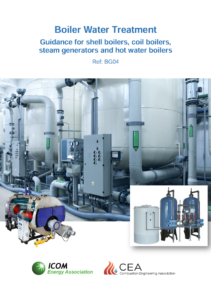
Purpose of BG04
The core purpose of BG04 is to explain how correct water treatment protects boilers and associated systems from avoidable damage and unsafe operating conditions. The guide makes clear that untreated or poorly managed water can lead to scale build-up, corrosion, foaming, priming, carryover, overheating, tube failure, loss of efficiency, and in severe cases catastrophic boiler damage. It positions water treatment as a key part of safe boiler management rather than a purely chemical or maintenance issue.
BG04 emphasises that poor or inadequate water treatment is implicated in the vast majority of boiler failures. It therefore promotes a disciplined approach that combines correct pre-treatment, chemical treatment, routine testing, competent supervision, and documented control procedures. The guide is practical in nature and is designed to help sites reduce breakdowns, extend plant life, improve steam quality, and maintain compliance with legal and operational standards.
Main Topics Covered in BG04
The guidance is organised around the main technical and management issues that affect boiler water quality and boiler integrity. Its coverage moves from fundamental risks, through treatment methods and testing, to legal duties and responsibilities.
• Introduction to key risks: scale, corrosion, and foaming/priming are introduced as the main technical threats to safe and efficient boiler operation.
• Scale and deposit formation: the guide explains how hardness salts, silica, sludge, and deposits form, how they impair heat transfer, and why they can lead to overheating and distortion of pressure parts.
• Pre-treatment methods: BG04 describes filtration, softening, reverse osmosis, dealkalisation, and demineralisation, and explains when each may be appropriate.
• Corrosion control: it discusses oxygen removal, pH control, condensate quality, deaeration, and the importance of maintaining protective waterside conditions.
• Foaming and carryover: the guide explains how high dissolved solids, suspended solids, detergents, and poor operating conditions can destabilise boiler water and reduce steam quality.
• Conditioning treatment: it outlines the need for chemical dosing, daily site testing, recording of results, and corrective response procedures.
• Hot water closed-loop systems: BG04 extends beyond steam boilers to cover filling, flushing, inhibition, cleaning, microbiological control, and monitoring of hot water systems.
• Special applications: the guidance includes coil boilers, steam generators, idle boilers, biomass boilers, and electric or electrode boilers.
Key Technical and Operational Messages
A central message running throughout BG04 is that water treatment is not a one-off intervention. It requires continuous control, competent management, and a treatment regime that matches the boiler type, operating pressure, feedwater quality, and end use of the steam or hot water.
BG04 makes clear that pre-treatment alone is not enough. Even softened or otherwise treated water usually still requires chemical conditioning to control residual hardness, dissolved oxygen, alkalinity, and suspended solids. The guide also emphasises that routine site testing is essential: daily monitoring of boiler water, feed water, and basic condensate quality is expected, and specialist visits are intended to support rather than replace local testing. Automatic TDS control, automatic dosing, and well-maintained monitoring systems are presented as the minimum acceptable standard for modern steam boiler treatment systems.
For hot water boilers, BG04 stresses that a closed loop is not maintenance-free. Systems still require correct initial fill water, inhibitor and biocide control, protection against oxygen ingress, periodic cleaning where necessary, and ongoing monitoring of losses and make-up water.
Compliance, Governance, and Responsibility
BG04 is not only a technical guide; it also has a strong compliance and governance focus. It links boiler water treatment to UK health and safety duties under legislation and guidance such as the Pressure Systems Safety Regulations (PSSR), the Provision and Use of Work Equipment Regulations (PUWER), the Control of Substances Hazardous to Health Regulations (COSHH), the Management of Health and Safety at Work Regulations (MHSWR), BG01, and HSE guidance on the safe management of industrial steam and hot water boilers.
A major requirement set out in the guide is the need for a site- and system-specific Boiler Water Treatment Risk Assessment and a corresponding Boiler Water Treatment Written Control Scheme. These documents are intended to define the treatment regime, identify risks, assign responsibilities, specify testing and corrective actions, and ensure that the water treatment programme is formally reviewed when operating conditions or personnel change.
The guidance also clarifies organisational roles. It places overall accountability with the Statutory Duty Holder while allowing day-to-day management to be assigned to a Responsible Person, provided that competence, authority, and communication routes are clear. Competence is a recurring theme throughout the document: personnel involved in testing, control, dosing, and oversight must be trained, assessed, and periodically refreshed, with records retained as evidence of safe management.
Overall Summary
Overall, BG04 is a practical and detailed guide to managing boiler water quality as a critical part of safe boiler operation. Its central theme is that reliable performance depends on the combined control of water chemistry, plant operation, testing, documentation, training, and management responsibility. For organisations operating industrial steam or hot water systems, BG04 provides a framework for reducing failures, improving efficiency, protecting assets, and demonstrating that water treatment is being managed in a safe and systematic way.
Link
You can download the full guide for free from the Combustion Engineering Association Website using the following link: https://cea.org.uk/wp-content/uploads/2025/07/CEA-BG04.pdf